WHAT WE DO
WHAT WE DO
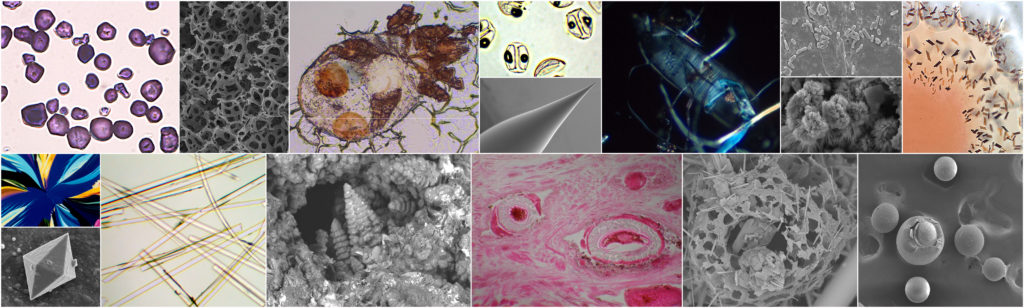
MVA Scientific Consultants is a full-service microscopy laboratory offering standardized and customized analytical testing. Since our establishment in 1990, we have worked on a variety of materials and collected a vast amount of experience and knowledge. We proudly serve a broad range of industries worldwide and are trusted by industry professionals for microscopic analysis. Read more about us.CAPABILITIES & EXPERTIES
CAPABILITIES & EXPERTISE

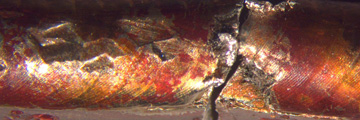
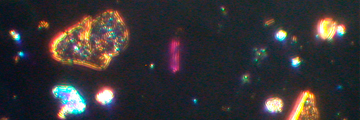
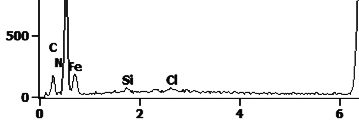
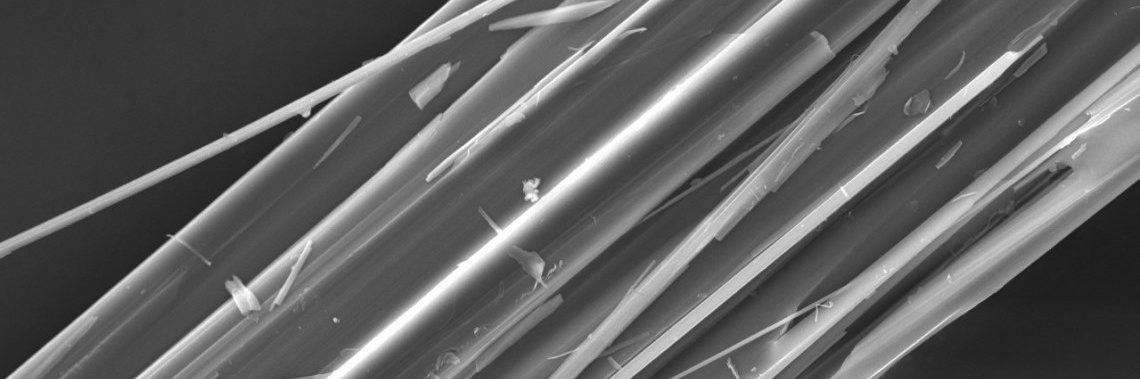
Particulate Identification in Pharmaceuticals
“Services were fantastic, thorough and patient with our demands. Every question was answered. The regulators were extremely happy with the work that was performed. I would recommend your services to anyone and will use MVA for any future needs.”
Product Defect Analysis
“Our experience with MVA is always very good. The report verified what we expected, that the cause of the glass defect was moisture attack. We wanted to make sure it wasn’t some other reaction. We are happy with the work MVA does for us.”
Unknown Material Analysis
“Typically my testing is related to asbestos and mold, which we maintain within our own laboratory. When I get into unknown materials, and associated concerns, is when I typically look to MVA.”
Failure Analysis and Particle Sizing
“MVA was very helpful in describing what was found and shed light on what the cause could be. The report and information was used to locate the process problem.”
Particulate Identification
“Working with MVA is always outstanding. Mary is very helpful and expedient. I cannot speak too much on the results because typically what we send you is outsourced on behalf of one of our clients. What I do see is how well the results are presented. We hardly ever get questions back from our clients about MVA’s work.”
SEM Particle Size Analysis
“Everything went well with the project and I think my client was satisfied with the results. Tim was very knowledgeable with the testing I had performed and gave me some tips which I found helpful. If a project happens to come up I will definitely use your lab again.”
Particulate Identification in Pharmaceuticals
“This is to inform you that services rendered by you were excellent. Regarding identification of [redacted] material, it worked well and it was 100% correct and correlating. Not only from our angle but also from the angle of coordination, support and customer dealing, you (MVA) supported us by considering our urgency, without waiting for advance payment. Overall we appreciated you all and happy about MVA.”
SEM Imaging Services
“The result helped us better understand the competitive sample. Michelle handled the project very professional, and we got the result promptly. We have been very satisfied with the services that MVA provides.”
Contamination Identification
“MVA did a good thorough job like they usually do for this project. The [redacted] contamination was identified, so the result is what we expected. I can’t think of anything you could have done better.”
Particulate Identification in Medical Device
“The various analyses were very helpful in our product investigations. The work was always done in a timely manner and the reports are very professional. Rich has been very good at communicating any issues, questions, etc… The only thing I don’t care for is the handwritten sample submission form. I would love to see an online form with the ability to include attachments (photos, problem description, etc…).”
Material Identification
“For unknown particle/ material ID, MVA provides the best quality results available from a commercial lab that I have found. Your data quality is far, far superior to that of your competition. In truth, there is no competition, because your data is usable and leads to real, applicable solutions. Theirs leaves you wondering and stumbling in the dark.”
Particle Sizing Analysis
“Everything was great as far as we’re concerned. All we needed was the particle sizing done to get a quote on a new scrubber control system and it was nice that Tim knew exactly what we needed better than we did.”
ACCREDITATIONS
CONFIDENTIALITY